
Businesses today work across different locations, teams, and processes. This complexity makes it hard to keep track of daily operations. Gaps in monitoring can cause delays, inefficiencies, and lower productivity. Modern video surveillance solutions are becoming more popular for this reason. They not only enhance security but also improve overall efficiency. By providing real-time tracking, data-driven insights, and centralized oversight, video surveillance solutions help organizations streamline workflows, monitor performance, and make quicker, better decisions. As companies grow, these systems are becoming essential for better coordination and more efficient operations.
The Shift from Security to Operational Intelligence
Earlier, the use of surveillance systems was largely focused around recording and security. When an incident occurs, security teams can pull footage to determine what happened and who was involved. Think about the classic “break in” situation: CCTV footage documents what happened, and then you analyze the tape after the fact. It’s simple and effective, but it’s still a passive, reactive tool that does not contribute to everyday business operations.
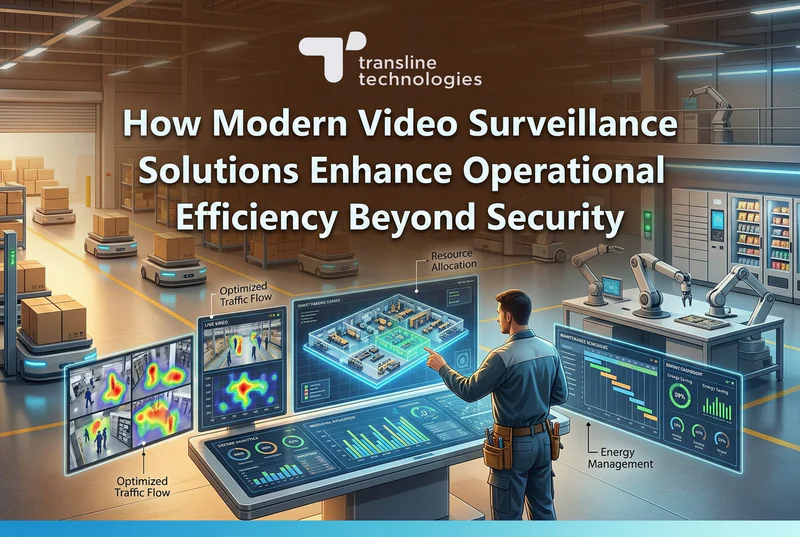
Now, it’s different. Today’s video surveillance solutions offer real-time visibility into business operations. Information is recorded, monitored and acted upon. In the world of smart surveillance systems, potential is now limited only by your imagination. Surveillance solutions are no longer focused on security alone. Instead, many businesses and organizations are using video surveillance solutions to improve overall efficiency and performance. In a recent article, we discussed how video technology can be used to improve business processes. Timely delivery of goods and services is key to business success. Any delays directly impact your business performance. To address this, monitoring cameras can be used in a warehouse environment to help streamline activity on the floor.
Think about the loading and unloading of trucks. Each factor: truck length, delivery time, and space available, can impact turnaround. By using cameras to monitor this level of activity, you can track where delays may be occurring. Once patrols are recorded, you can see where activity may have stalled and then act. In an office environment, real-time monitoring can help improve workflow efficiency. Using a real-time monitoring system, you can see a clear picture of where movement is occurring and how it’s impacting the utilization and workflow within an office space. Another way video technology can be valuable to business is by helping to understand how much space you’re using and where team members are moving to achieve this. Knowing where activity is occurring helps you identify bottlenecks and streamlines business activity.
Operational Benefits of Video Surveillance Systems
Modern video monitoring systems offer far more than continuous security coverage. They play a direct role in improving how businesses function on a daily basis. From tracking processes to optimizing resources, business monitoring solutions are now being used as practical tools for surveillance for operational efficiency, helping organizations improve productivity and maintain better control over operations.
Process Visibility
One of the biggest advantages of surveillance systems is improved visibility across operations. Businesses can monitor workflows in real time and understand how tasks are being carried out. This makes it easier to identify gaps and improve coordination between teams. For example, in large warehouses, cameras help track loading and unloading activities, ensuring smoother movement of goods and better time management.
Reduced Downtime
Operational delays can impact productivity and revenue. Surveillance systems help in identifying where processes are slowing down, allowing teams to take corrective action quickly. In manufacturing environments, video monitoring has been used to detect bottlenecks in production lines, helping reduce downtime and maintain consistent output. Similar approaches have been highlighted across industry use cases, where continuous monitoring supports uninterrupted operations.
Better Staff Productivity Tracking
With clear visibility into daily activities, organizations can better understand how resources are being utilized. Surveillance systems allow managers to track employee movement, task completion, and overall productivity. In retail environments, for instance, monitoring customer flow and staff positioning helps ensure that employees are allocated efficiently during peak hours, improving both service quality and operational performance.
Faster Issue Identification
Real-time monitoring allows businesses to detect issues as they happen instead of reacting later. Whether it is a delay in a process, unauthorized access, or unusual activity, systems can flag concerns instantly. According to some reports, several organizations have adopted smart surveillance to quickly identify operational inefficiencies and respond before they escalate into larger problems.
Centralized Operations
For enterprises with multiple locations, managing operations can be complex. Surveillance systems bring all monitoring into a single platform, allowing teams to oversee different sites from one place. This centralized approach improves coordination, reduces the need for on-site supervision, and ensures consistent processes across locations. It is especially useful for businesses operating across warehouses, offices, or retail outlets.
Role of Video Analytics and Real-Time Monitoring
The real value of modern systems comes from how video is used, not just how it is captured. With video analytics for business, footage is no longer just stored data. It is processed to generate insights that can be used to improve operations. This is where smart surveillance systems make a difference, turning everyday activity into something measurable and actionable. With real-time business monitoring, teams do not have to wait for reports or manual checks. Systems can track movement, detect unusual patterns, and send instant alerts when something is not right. This allows businesses to stay in control of operations as they happen.
Behavior tracking is one of the most useful applications. For example, in retail environments, surveillance systems can analyze customer movement patterns to understand which areas receive more attention. This helps in optimizing store layout and staff placement. In manufacturing units, similar systems can detect unsafe movement or restricted area access, helping reduce risks and maintain smooth operations.
Basic movement analysis, such as identifying crowded zones or underutilized spaces, also helps improve planning. Instead of relying on assumptions, businesses can make decisions based on actual data. Instant alerts further strengthen control by notifying teams about delays, unauthorized activity, or process disruptions. This approach supports continuous performance tracking. Over time, patterns become clearer, making it easier to identify inefficiencies and improve workflows. What used to be passive footage has now become a tool for active operational management.
Enhancing Enterprise Operations with Scalable Systems
As businesses grow, their operations become more complex. Managing multiple locations, teams, and processes requires systems that can scale without creating additional challenges. This is where enterprise surveillance systems and workflow monitoring systems become essential. Scalability ensures that surveillance systems can expand along with business needs. Whether it is adding new locations or increasing workflow monitoring system coverage, the system should be able to handle growth without affecting performance. This is especially important for enterprises operating across cities or regions.
Centralized dashboards play a key role here. They bring all operations into one interface, allowing teams to monitor different locations from a single point. This improves coordination and ensures consistency across sites. For example, a logistics company managing multiple warehouses can track activities across all facilities in real time, ensuring smooth operations and better control. Integration is another important factor. Modern systems can connect with other platforms such as access control or enterprise management tools, creating a more unified setup. This reduces silos and improves overall efficiency. Flexibility also matters. As business requirements change, systems should adapt without requiring complete replacement. In large corporate environments, this allows organizations to maintain continuity while expanding operations across different locations.
Choosing the Right Business Monitoring Solutions
Choosing the right business monitoring solutions comes down to how well the system fits your operations and scales with your growth. A solution that offers strong analytics, easy integration, and reliable performance can make a noticeable difference in how efficiently a business runs. As operations become more complex, having a system that brings visibility, control, and flexibility becomes essential.
Transline Technologies stands out by delivering advanced, enterprise-grade video surveillance solutions designed to go beyond basic monitoring. With a focus on intelligent systems, seamless integration, and scalable infrastructure, Transline helps businesses improve operational efficiency while maintaining complete control over their environments. Connect with Transline Technologies to find the right video surveillance solution for your business.