

Customer expectations in retail have changed a lot over the past few years. People no longer just walk into a store, pick a product, and leave. They expect a smooth, connected experience whether they are shopping online, browsing on their phone, or visiting a physical store. Speed, convenience, and personalization have become just as important as the product itself. Because of this shift, businesses are rethinking how they approach the customer experience in retail. Traditional methods are no longer enough to keep up. Retailers are now focusing more on creating a strong digital retail experience, where every interaction feels relevant and easy.
This is where Retail AI Software is starting to make a real difference. With the growing use of AI in retail, businesses are able to understand their customers better and respond faster. Instead of reacting after something happens, they can now anticipate customer needs and improve the overall experience in a more proactive way.
The Evolution of Customer Experience in Retail
Earlier, the customer experience in retail was quite simple. It mostly depended on in-store interactions, product availability, and how helpful the staff was. There was very little personalization, and most decisions were based on what was physically available in the store. Now, things have changed. The focus has moved toward a more connected digital retail experience, where customers expect consistency across all channels. Whether someone is browsing online or visiting a store, they expect the same level of service and convenience. This is where AI in retail comes into play. Retailers are using AI to understand what customers like, how they shop, and what influences their decisions. Instead of offering the same experience to everyone, businesses can now create more tailored interactions.
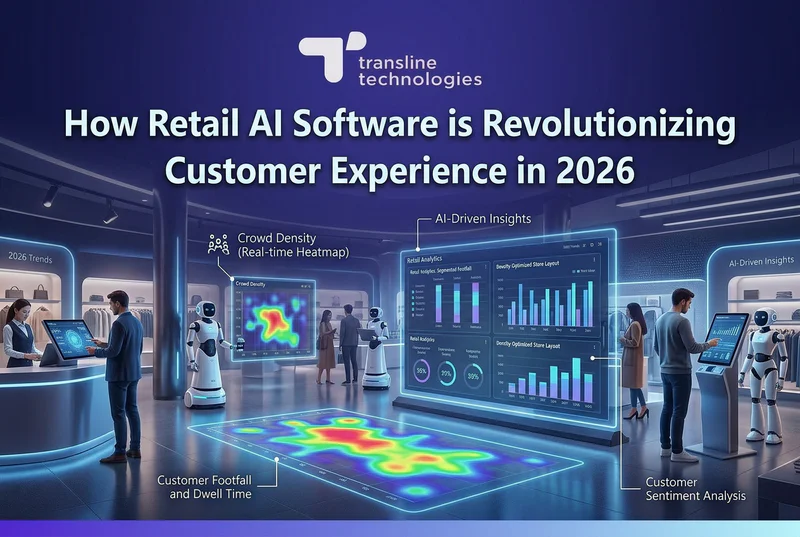
For example, many stores today use smart systems to understand how customers move within the space. This helps them rearrange layouts, improve product placement, and make the overall shopping experience smoother. It’s a small change, but it makes a noticeable difference in how customers interact with the store.
How Retail AI Software Enhances Customer Insights
Understanding customers has always been important, but now it’s more detailed and data-driven than ever. Retail AI Software helps businesses collect and process large amounts of data, turning it into useful AI customer insights. With tools like retail customer analytics, retailers can see patterns that would otherwise go unnoticed. They can understand what customers are buying, what they are browsing, and even what they are ignoring. This makes it easier to make smarter decisions.
A big part of this is customer behavior analysis. Businesses can track how customers interact with products, how long they spend in certain areas, and what leads them to make a purchase. These insights help improve everything from store layout to pricing strategies. Some industry reports have shown that retailers using AI-based analytics are seeing better results because they are able to respond to customer needs more quickly and accurately.
Understanding Customer Behavior
With customer behavior analysis, businesses can start to see clear patterns in how people interact with products and store environments. For example, a fashion retailer used AI-powered in-store analytics to track how customers moved through the store. They discovered a high-traffic section where people spent time but didn’t purchase anything. After analyzing the data, they realized the product placement and pricing were misaligned. Once adjusted, conversions in that section increased significantly. Another case showed that an online brand struggling with low engagement used AI to analyze browsing behavior and purchase history. They found customers were dropping off due to irrelevant recommendations. By fixing this, they improved engagement and reduced churn. So instead of guessing, businesses use behavior data to directly improve sales and experience.
Real-Time Customer Insights
One of the biggest advantages of AI customer insights is the ability to understand what is happening inside a store as it happens. Retailers no longer have to depend on assumptions or delayed reports. With real-time tracking, they can see how many customers are entering the store at different times of the day, which helps in understanding peak hours and planning staff accordingly. These systems can also give a basic view of customer demographics, such as age groups and gender distribution. For example, if a store sees higher footfall from a younger audience during evenings or weekends, it can adjust product displays or promotions to better match their preferences. Similarly, if a certain section attracts more female customers while another sees more male engagement, product placement can be optimized to improve conversions. Another important insight is understanding which aisles or sections receive the most attention. If one part of the store consistently has higher footfall, retailers can use that space for high-demand or high-margin products. On the other hand, areas with low engagement can be improved through better layout, lighting, or promotions.
Data-Driven Personalization
Using retail personalization, businesses can shape the shopping experience based on the kind of customers they see regularly. For example, if a specific demographic group keeps visiting the store more often, retailers can increase the availability of products that appeal to them. By tracking patterns like which age group visits the most, on which days, and at what time, stores can make smarter decisions about what to display and when. This also helps in customizing the store environment. If younger customers visit more during evenings, the store can highlight trending or fast-moving products during those hours. Similarly, if a certain category attracts more attention from a particular group, that section can be expanded or repositioned to improve visibility.
Retailers can even redesign layouts based on what actually draws customer attention. By observing which sections get the most footfall and engagement, they can adjust product placement to make the store more intuitive and appealing. Over time, these small changes make the experience feel more relevant to customers while also improving overall sales performance.
Customer Analytics for Better Planning
With retail customer analytics, businesses can use actual store data like customer footfall, gender demographics, and age groups to plan more effectively. Instead of guessing, retailers can clearly see how many customers visit the store, what kind of audience they attract, and when the store is most active. For example, if data shows that a store receives higher footfall from a younger demographic during weekends, retailers can plan promotions, product displays, and inventory around that audience. Similarly, if weekday mornings attract a different group, such as working professionals, the store can adjust offerings to match their needs.
Tracking busiest hours also helps in better staff planning. If evenings consistently show higher footfall, more staff can be assigned during those hours to manage customers efficiently. Over time, this kind of weekday and weekend analysis helps businesses align their operations with actual customer behavior, improving both efficiency and customer experience.
Improving Engagement with Insights
With AI customer engagement, insights like gender demographics, age groups, and customer footfall can be used to make interactions more relevant and timely. Instead of offering the same experience to everyone, retailers can adjust how they engage with customers based on who is in the store at that moment. For example, if a store sees a higher number of female customers during a certain time of the day, it can highlight products or promotions that are more relevant to that audience. Similarly, if a younger age group is more active during evenings, engagement strategies can shift to match their preferences.
Footfall data also helps improve on-ground engagement. During peak hours, additional staff can be placed in busy sections to assist customers quickly, reducing wait times and improving service. On slower days, teams can focus more on personalized assistance and customer interaction. By using these insights in real time, retailers can create a smoother and more responsive shopping experience that feels more aligned with what customers actually need.
Personalization and Engagement with AI in Retail
Personalization is now one of the biggest factors in improving the customer experience in retail. People are more likely to engage with brands that understand their needs and offer relevant suggestions. With AI in retail, this becomes much easier. Businesses can use retail personalization to recommend products, create targeted offers, and improve the overall shopping journey. AI customer engagement also helps brands connect with customers more effectively. Instead of one-way communication, businesses can create more interactive experiences that feel personal.
Many smart retail solutions are already doing this. For example, online platforms suggest products based on browsing history, while physical stores are starting to use AI CCTV systems to improve their store performance based on customer activity. Some reports have shown that retailers using these strategies are seeing better customer retention and higher engagement, simply because the experience feels more relevant and less generic.
Real-Time Experience with Smart Retail Solutions
Today, customers expect instant responses and a smooth shopping journey. This is where smart retail solutions play an important role in improving the digital retail experience. These systems allow businesses to interact with customers in real time and respond to their needs without delays. For example, Retailers can see in real time which aisle or section is receiving more attention and which areas are being ignored. This helps them quickly make changes, such as adjusting product placement or assigning staff to those sections, ultimately improving the overall customer experience.
Role of Retail AI Software in Building Customer Loyalty
Customer loyalty is directly linked to how smooth and relevant the shopping experience feels. When businesses consistently deliver a better customer experience in retail, customers are more likely to return. This is where Retail AI Software plays a key role. With the help of AI customer insights, businesses can understand what their customers prefer and how they shop. This allows them to create personalized loyalty programs that feel more meaningful .For example, retailers can track how many customers visit frequently, what sections they spend the most time in, and what they usually purchase. Based on this, they can offer targeted rewards or discounts on those specific categories, making the experience feel more relevant and increasing the chances of repeat visits.
Customer satisfaction improves when experiences feel simple and relevant. By using AI customer insights, businesses can create a more engaging environment. For example, if a store sees that certain sections get overcrowded during peak hours, they can quickly assign more staff to those areas or manage the flow better, making the shopping experience smoother and more comfortable for customers.
Choosing the Right Retail AI Software for Better Customer Experience
Selecting the right Retail AI Software is important for businesses that want to improve their operations and enhance the customer experience in retail. The right system should not only solve current challenges but also support long-term growth. One of the key factors to consider is scalability. As businesses grow, their systems should be able to handle increased data and operations without affecting performance. Many smart retail solutions are designed to scale easily, making them suitable for both small and large businesses.
Integration is equally important. The chosen Retail AI Software should work smoothly with existing systems such as billing, inventory, and customer management platforms. This ensures better coordination and avoids disruptions. Ease of use also plays a major role. Teams should be able to operate the system without complications. Along with this, strong analytics capabilities are essential. With the help of AI in retail, businesses can gain insights that support better decision-making and improve overall performance.
Retail is moving toward a more connected and intelligent future, where experience matters as much as the product itself. Retail AI Software is helping businesses deliver a better customer experience in retail by making interactions more personalized, efficient, and responsive. As expectations continue to grow, creating a strong digital retail experience will become even more important. Businesses that adopt AI-driven solutions early will be better positioned to understand their customers and stay ahead in a competitive market. Businesses looking to enhance customer experience and stay competitive need intelligent solutions that deliver real-time insights and personalization. Transline Technologies offers advanced Retail AI Software designed to transform customer interactions and drive better engagement. Get in touch to explore the right solution for your business.